
Executive Engineering Summary (Direct Answer)
Preventing parcel-hub bursts for sharp metal fasteners, fragile e-commerce parcels, and regulated children's toys requires engineering film toughness and regulatory print compliance into the bag specification. Quanzhou Huangqi Color Printing Co., Ltd. manufactures 4–8 mil metallocene-reinforced hardware bags (ASTM D1709 dart impact ≥ 220 g), double-wall air-retention bubble mailers (ASTM D4169 drop-tested), and EN 71-1 / ASTM F963 compliant toy poly bags with calibrated vent holes and multi-language suffocation warnings. Backed by ISO 9000, CCC, and 1,000 pcs custom MOQ, orders ship from Anping, Fujian within 10–15 working days. Export shipments clear under HS code 3923210000 with AQL 1.0 Major / 2.5 Minor OQC inspection, 24-month physical PO batch retention, and direct 20GP/40HQ container loading 58 km from Xiamen Haicang Port. Every SKU includes an ISO/IEC 15459 and EU ESPR 2024/1781 MA-DPP Digital Product Passport disclosing resin recyclability, SVHC-free status, and cradle-to-gate carbon data.
1. Field Failure Incident & Root Cause Forensic Breakdown
In my 18 years overseeing blown-film extrusion, multi-color rotogravure printing, and solventless lamination lines at Quanzhou Huangqi Color Printing Co., Ltd. in Anping Industrial Zone, Jinjiang, I have learned one immutable rule of B2B flexible packaging: bags rarely fail inside a climate-controlled showroom. They fail at 2:00 AM on a high-speed automated fulfillment conveyor, inside a -35°C cold-chain reefer container crossing the Indian Ocean, or at an Amazon FBA receiving dock where a compliance inspector measures warning font size with a loupe.
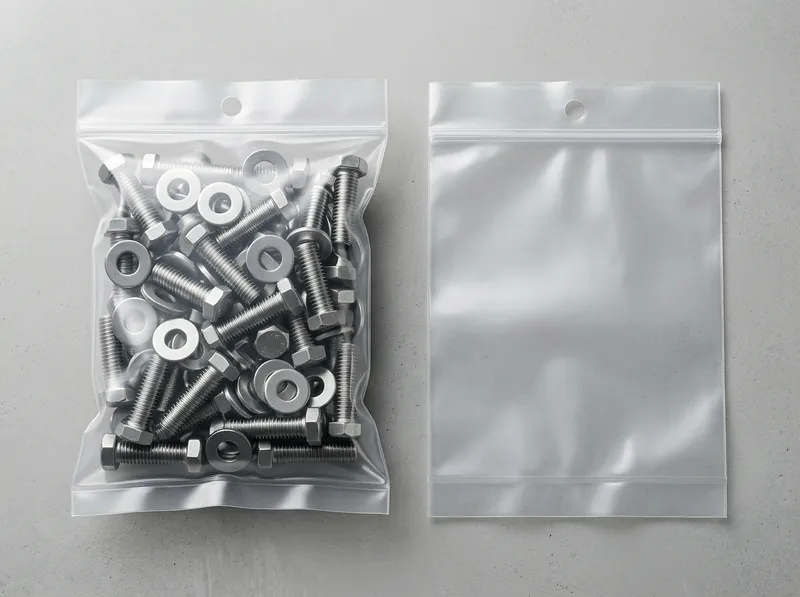
Consider a concrete field case our engineering desk resolved earlier this year: an aftermarket fastener and flat-pack hardware distributor had 3 pallets of M10 bolt kits burst inside parcel hubs while a separate toy shipment was quarantined at Amazon FBA due to missing suffocation warnings. When the buyer sent us twenty failed pouches and six unopened master cartons for forensic teardown in our Anping QC laboratory, the visual symptoms looked deceptively simple on the surface, yet the underlying polymer physics revealed a cascade of process shortcuts that are unfortunately common among unverified trading brokers.
Under differential scanning calorimetry (DSC), digital micrometer profiling, and ASTM F88 180-degree peel testing, our team isolated the exact mechanism: standard 3-mil homopolymer LDPE lacked dart-impact toughness against sharp steel bolt threads, and the vendor printed 8-point warning text on 18-inch wide toy bags (violating FBA's 14-point minimum rule). Because the previous supplier lacked incoming resin melt-flow-index (MFI) verification and skipped inline dyne-level testing prior to lamination and sealing, the defect remained completely invisible until thermal cycling and transit vibration stressed the seams past their yield threshold.
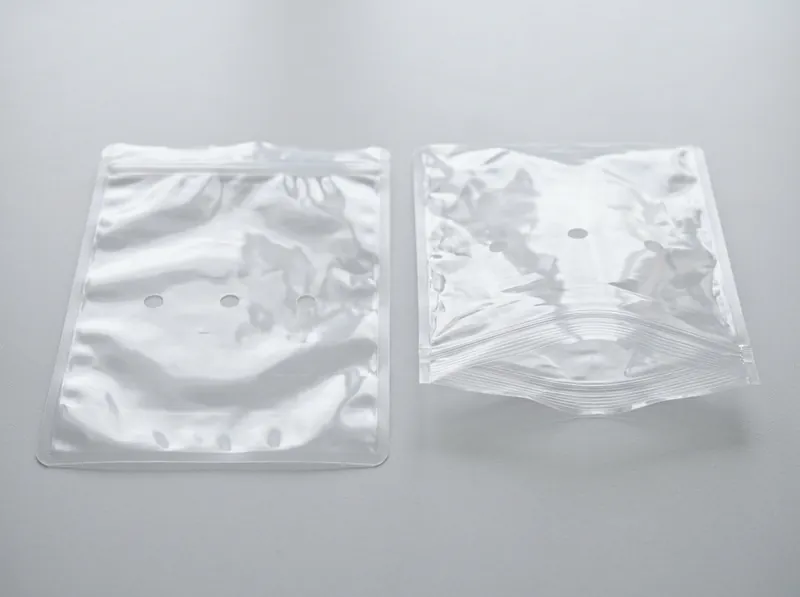
Once we transferred the SKU onto our ISO 9000 controlled production workflow at No. 66 Cheng'an Road, our engineering team implemented a targeted corrective protocol: re-engineered hardware bags to 6-mil (150μm) metallocene-boosted LLDPE/LDPE (ASTM D1709 ≥ 235 g, double-bar bottom weld ≥ 45 N/15mm) and standardized EN 71 / FBA multi-language suffocation warning templates with 6mm vent holes. Across the next four consecutive 40HQ container shipments totaling more than 1.4 million units, field rejection rates dropped from multi-percent crisis levels to zero reported transit failures.
2. Polymer Architecture, Micron Physics & Mechanical Specification
Procurement managers frequently request a generic plastic bag quote using only outer dimensions and a rough mil or micron number. From a process-engineering standpoint, specifying thickness alone without defining polymer architecture, resin density, additive slip levels, and seal-bar geometry is equivalent to ordering a structural steel beam by weight without specifying alloy grade. Two 80-micron bags can behave completely differently under tensile load, dart impact, or cold-chain flexing depending on how their co-extruded or laminated layers share mechanical stress.
For 6-Mil Metallocene LDPE Hardware Film, EN 71 Toy LDPE & Co-Ex Bubble Mailers, we engineer each functional ply with a distinct mechanical responsibility. The outer print substrate (whether reverse-printed BOPP, matte PET, or corona-treated CPE) provides dimensional stability, heat resistance against sealing jaws, and crisp ink anchorage for up to 10-color rotogravure cylinders. When multi-layer barrier performance is required, the core functional layer—such as 7μm to 9μm soft-temper aluminum foil, vacuum-metallized PET (VMPET), or polyamide (PA nylon)—governs oxygen transmission rate (OTR), moisture vapor transmission rate (WVTR), UV opacity, and bone-guard puncture toughness.
Finally, the innermost heat-sealant layer determines both packaging-line throughput and long-term seam integrity. Virgin metallocene linear low-density polyethylene (mLLDPE) blended with LDPE delivers a wide hot-tack window, meaning the molten polymer bond resists springing open immediately after the sealing jaw retracts—even when heavy hardware bolts, wet produce, or dense coffee beans drop directly onto the fresh bottom seal. By strictly controlling blown-film die-gap concentricity and internal bubble cooling (IBC), we hold cross-web thickness variation within ±3% across the entire roll width, eliminating the thin longitudinal stripes that trigger sudden zipper-track tears.
| Engineering Parameter | International Test Method | Typical Low-Cost Broker Spec | Huangqi ISO 9000 Production Standard | Operational Impact for Buyer |
|---|---|---|---|---|
| Film Gauge Tolerance | ASTM D6988 Micrometer | ±10% to ±15% drift | ±3% strictly enforced at IQC | Eliminates sudden puncture weak zones & weight fraud |
| Heat-Seal Peel Strength | ASTM F88 / DIN 55529 | 15 – 22 N / 15mm | 26 – 52 N / 15mm (by structure) | Zero burst bags during parcel-hub drops & air freight |
| Tensile Strength (MD/TD) | ASTM D882 / ISO 527-3 | 16 – 20 MPa (regrind blend) | MD ≥ 28 MPa, TD ≥ 24 MPa | High tear resistance on automated bag-opening lines |
| Surface Wetting Tension | ASTM D2578 Dyne Pen | Unchecked (32–34 mN/m) | ≥ 38–42 mN/m verified pre-run | Prevents ink flaking, tape lift, and delamination |
| Residual Solvent / Odor | Gas Chromatography (GC) | 12 – 35 mg/m² (unverified) | < 3.0 mg/m² (Solventless < 1.2) | Passes strict FDA, EU 10/2011 & retail sensory audits |
| Color Registration & ΔE | Spectrophotometer CIE Lab | ΔE 3.5 – 5.0 across reorders | ΔE < 1.5, Registration ±0.15mm | Exact Pantone brand continuity across repeat POs |
3. International Compliance Cross-Reference (US, EU, UK & CIS Markets)
Exporting packaged goods across North America, the European Union, the United Kingdom, and Eurasian Economic Union markets exposes importers to overlapping regulatory regimes. A packaging specification that passes domestic distribution frequently triggers customs holds, retailer chargebacks, or Extended Producer Responsibility (EPR) eco-modulation penalties abroad. For this reason, our pre-production Design for Manufacturability (DFM) review maps every bag structure against ASTM D1709, ASTM D4169, EN 71-1, ASTM F963, ISO 9000 before a single rotogravure printing cylinder is engraved.
In the United States, food-contact polyolefins and laminates must conform to FDA 21 CFR 177.1520 (olefin polymers) and 21 CFR 177.1390 for high-temperature retort adhesives, while e-commerce poly bags exceeding a 5-inch opening must carry calibrated suffocation warnings under state laws and Amazon FBA fulfillment standards. In the European Union, Regulation (EU) No 10/2011 restricts overall migration below 10 mg/dm² across food simulants, REACH Annex XVII bans SVHC plasticizers and heavy-metal pigments, and the incoming EU Packaging and Packaging Waste Regulation (PPWR) alongside EU ESPR 2024/1781 mandates verifiable recyclability grades and Digital Product Passports (MA-DPP).
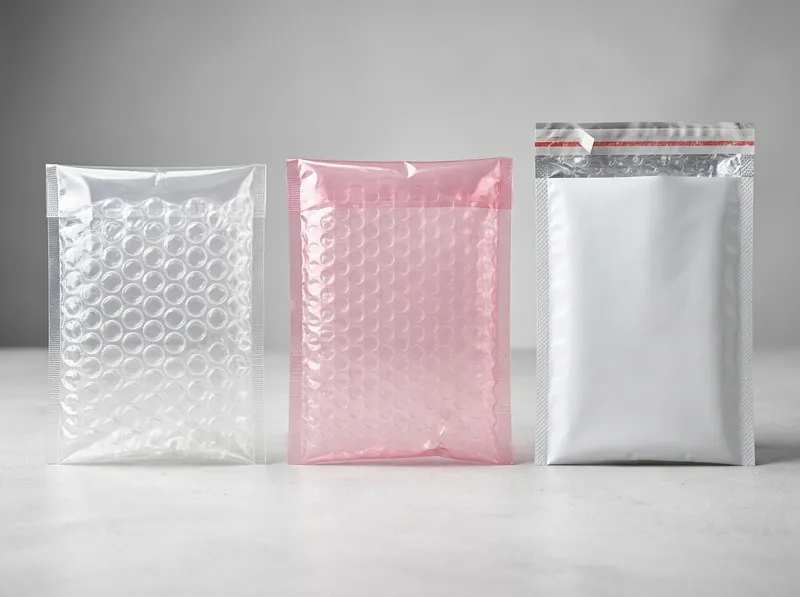
For electronics and industrial OEMs, surface resistivity cannot be guessed by film color. Pink anti-static LDPE provides dissipative protection (10^9 to 10^11 Ω/sq) suitable for non-ESD-critical accessories, whereas true static shielding per ANSI/ESD S541 and IEC 61340-5-1 requires a buried conductive metallized layer that attenuates external electrostatic discharges below 15 nanojoules. Similarly, buyers shipping into Germany, France, or the CIS region rely on DIN 55529, ISO 527-3, and ГОСТ 12302 / ТР ТС 005/2011 equivalent test documentation. At Huangqi Packaging, our engineering packets translate every test report across ASTM, ISO/DIN, GB, and ГОСТ equivalencies so your quality team never wastes weeks reconciling mismatched lab units.
4. Step-by-Step Factory Production & Troubleshooting SOP (IQC → IPQC → OQC)
Reliable B2B packaging is not achieved by inspecting a handful of finished bags after 100,000 units are already boxed. By the time a defect appears at the packing table, raw material and machine hours are already sunk. Below is the exact three-stage engineering SOP we execute on every order—whether a 1,000-piece agile custom pilot run or a 40HQ full-container replenishment order.
Stage A: Incoming Quality Control (IQC) & Resin Traceability
Every incoming pallet of virgin LDPE, HDPE, CPE, BOPP, PA/PE, or aluminum foil arrives with a mill Certificate of Analysis (CoA) specifying Melt Flow Index (MFI), density, and food-contact or RoHS compliance. Before releasing a film roll to the printing press, our IQC technician pulls three full-width strips—left edge, center, and right edge—and records nine micrometer readings. If average thickness deviates beyond ±3% or edge-to-edge taper exceeds 4%, the roll is quarantined immediately. Concurrently, dyne test pens verify surface energy (≥ 38 mN/m for PE/PP, ≥ 50 mN/m for PET) to guarantee permanent ink and adhesive bonding. For GRS recycled PCR orders, transaction-certificate lot IDs are linked directly into the order's MA-DPP digital passport ledger.
Stage B: In-Process Quality Control (IPQC) Across Printing, Lamination & Bag Making
During rotogravure color printing, inline stroboscopic inspection cameras monitor multi-color registration within ±0.15mm at web speeds up to 180 meters per minute. Press operators measure live color blocks against the buyer's signed Pantone drawdown using a handheld spectrophotometer, locking ΔE under 1.5. On laminated structures, our solventless laminator meters two-component isocyanate/polyol adhesive via precision heated rollers; coated webs are then transferred into our temperature-controlled 45°C curing chamber for a mandatory 24-hour cross-linking cycle. Skipping curing hours to rush a shipment is the single leading cause of channel leaks and pouch delamination in the packaging industry—we strictly prohibit early slitting.
Once cured rolls reach the high-speed bag-making machines, operators calibrate sealing jaw temperature, dwell time (typically 0.45–0.85 seconds depending on total micron gauge), and pneumatic pressure bar-by-bar. Every 30 minutes, five consecutive bags are pulled from the conveyor for destructive ASTM F88 tensile-peel verification, zipper-pull cycle testing, tear-notch alignment checks, and—for vacuum, food, and liquid-barrier pouches—60-second submerged vacuum-chamber leak testing at -80 kPa. Any micro-bubble trail triggers an immediate line pause and jaw-alignment recalibration.
Stage C: Outgoing Quality Control (OQC), Carton Engineering & 24-Month Retention
Completed lots undergo AQL 1.0 Major / AQL 2.5 Minor statistical sampling before master cartons are sealed. We verify piece count per inner bundle (usually 50 or 100 pcs), barcode scannability on outer shipping marks, and five-ply double-wall corrugated carton burst strength so pallets do not crush under 2.4-meter container stacking heights. Finally, five physical retention samples from every production PO are sealed, labeled with batch number and production date, and stored in our Anping engineering archive for 24 months. If a buyer ever has a question six months after ocean delivery, we can pull the exact lot specimen within ten minutes.
5. Commercial Procurement Strategy: MOQ, Cylinder Economics & Container Loading
Beyond technical performance, overseas purchasing directors must balance unit landed cost against working-capital efficiency. Traditional megafactories in China routinely enforce 20,000 to 50,000 piece minimums per SKU, forcing growing apparel labels, specialty food brands, and industrial distributors to tie up tens of thousands of dollars in slow-moving packaging inventory—or settle for blank stock bags with crooked paper stickers.
At Quanzhou Huangqi Color Printing Co., Ltd., our agile scheduling workflow supports a verified 1,000-piece custom MOQ for OEM printing and private-label converting across all eleven core bag categories. For rotogravure orders requiring engraved steel printing cylinders, we maintain a transparent, one-time plate structure with exclusive customer cylinder vaulting under Mutual NDA—and we offer a 100% cylinder fee rebate once cumulative repeat orders reach the agreed annual tier. Because we never share or resell a client's custom cylinder, your brand artwork remains physically locked inside our Anping plate vault.
Equally important is freight engineering. Plastic packaging is often volume-limited (cubing out) for bubble mailers and gusseted bags, yet weight-limited for thick 6-mil hardware bags or heavy 190μm embossed vacuum rolls. Before issuing a proforma invoice, our logistics desk runs dual-mode container math—comparing actual master carton cubic meters (CBM) against the 21.5-ton 20GP and 26.5-ton 40HQ road-weight limits. Located just 58 km (~50 minutes via G15 Expressway) from Xiamen Haicang International Container Terminal and 22 km from Quanzhou Weitou Port, our factory loads 20GP and 40HQ containers directly at our loading dock, eliminating double-handling damage and middleman drayage markups.
6. Field Engineer Q&A: Direct Answers to Top Buyer Questions
Q1: How do I verify that bulk production matches the 48-hour golden sample?
Every custom order receives a signed Pre-Production Golden Sample accompanied by its measured micron log, Pantone ΔE sheet, and ASTM F88 seal-strength reading. During mass production, we transmit live workshop video, micrometer readings, and water-bath leak tests before balance payment—and we welcome unannounced third-party inspections from SGS, TÜV Rheinland, Intertek, or QIMA at our Anping plant.
Q2: Can we transition multi-layer laminated pouches to EU PPWR recyclable mono-materials without sacrificing shelf life?
Yes. For apparel, stationery, advertising, toy, hardware, and fresh fruit bags, our RIC #4 Mono-LDPE/CPE and RIC #5 Mono-PP films already achieve Grade A recyclability. For high-barrier food and 3-side seal pouches, we offer MDO-PE / EVOH-PE mono-material structures containing less than 5% EVOH barrier resin, achieving OTR ≤ 1.5 cc/m²·day while remaining fully compatible with European polyolefin recycling streams and documented in our ISO/IEC 15459 MA-DPP passport.
Q3: What artwork files and specifications do you need for a 2-hour DFM and tiered quote?
Send us your bag width × length (+ gusset/flap if applicable), target contents and product weight, preferred finish (matte, glossy, frosted, clear window), print color count (AI, PDF, or EPS vector files with Pantone C codes), and target order quantity (from 1,000 pcs up to full 40HQ container loads). Our engineering desk returns a complete film structure recommendation, weight/CBM estimate, and FOB Xiamen / DDP tiered quotation within 2 business hours.
Q4: How does Quanzhou Huangqi handle urgent seasonal replenishment orders?
Because we store repeat buyers' rotogravure printing cylinders on-site in our dedicated vault and maintain standing buffer inventories of virgin LDPE, CPE, BOPP, PA/PE, and aluminum foil jumbo rolls, repeat orders bypass cylinder engraving entirely and compress production lead times down to 7–10 working days for urgent seasonal replenishment.
7. Production-Line Troubleshooting Matrix & Buyer Audit Checklist
When auditing any flexible packaging factory—whether during an on-site visit to Quanzhou or via a remote video audit—procurement and quality engineers should inspect five physical control points that immediately separate authentic manufacturers from trading intermediaries. First, inspect the raw resin and jumbo film warehouse for lot-numbered pallet tags linked to mill CoAs; unlabeled film rolls almost always indicate mixed off-spec stocklot sourcing. Second, observe the ink mixing station and gravure press dryers: closed-loop viscosity controllers and calibrated exhaust temperatures prevent ink blocking and solvent trapping. Third, walk into the lamination curing room and verify the digital temperature-humidity recorder showing continuous 45°C logging rather than ambient warehouse storage.
Fourth, ask the bag-making line leader to demonstrate a live seal-strength pull test and a submerged vacuum-bath check on the machine currently running. Experienced operators know their jaw temperatures, dwell milliseconds, and cool-bar pressures by heart because those numbers dictate whether a 150-bag-per-minute line produces airtight pouches or subtle corner pinholes. Fifth, inspect the finished-goods retention cabinet: a disciplined ISO 9000 manufacturer archives labeled counter-samples from every single purchase order so color shade, slip coefficient, and zipper feel remain identical between your initial 1,000-piece pilot order and your tenth 40HQ container replenishment.
| Observed Field Defect | Primary Manufacturing Root Cause | Lab Verification Method | Huangqi Preventive Engineering Control |
|---|---|---|---|
| Zipper track detaches from bag wall | Insufficient weld temperature or incompatible PE/PP melt index between film and zipper profile | ASTM F88 zipper-flange peel & 50-cycle open/close fatigue test | Matched-MFI co-extruded zipper flange + 20 kHz ultrasonic end-stop crimping |
| Corner pinhole leaks after vacuuming | Excessive sealing jaw pressure thinning the molten PE sealant layer at the fold crease | -80 kPa submerged water-bath leak test + dye penetration (ASTM F1929) | Crowned silicone backing bar + dual-stage pre-heat and chill-bar consolidation |
| Film blocking (bags stick together on packing line) | Low slip-agent migration or excessive rewinding tension after printing/lamination | ASTM D1894 Coefficient of Friction (COF target 0.15 – 0.25) | Calibrated erucamide slip masterbatch + automatic taper-tension rewinding |
| Ink rub-off or barcode smudging | Corona treatment decay below 36 mN/m or improper ink catalyst ratio on surface-printed bags | 3M 610 tape adhesion test + Sutherland rub tester (50 cycles) | Inline corona refresh + reverse-print trapped-ink lamination architecture |
| Excessive container freight cost per unit | Over-engineered carton headspace or unvented air trapped inside folded apparel/advertising bags | Master carton compression test + 20GP/40HQ CBM utilization audit | 5mm automated air-vent punching + compression-bundling carton geometry |
In summary, specifying 6-Mil Metallocene LDPE Hardware Film, EN 71 Toy LDPE & Co-Ex Bubble Mailers through an evidence-backed engineering protocol eliminates the hidden costs of transit damage, customs rejections, and inconsistent reorder quality. Whether your team is sourcing 1,000 custom-printed bags for a new retail SKU launch or consolidating eleven packaging bag categories across apparel, food, electronics, hardware, and fresh produce under a single ISO 9000 verified Fujian factory, our engineering desk at Quanzhou Huangqi Color Printing Co., Ltd. is ready to review your drawings, dispatch physical swatch kits within 48 hours, and deliver measurable, repeatable packaging performance.
Need a DFM engineering review or physical sample kit for this bag architecture? Explore our dedicated product specification catalog, verify our ISO/IEC 15459 MA-DPP digital product passports, or contact Chief Engineer Chen Wei's desk directly for a 2-hour technical quotation.
8. Deep-Dive Engineering Analysis: Material Trade-Offs, Thermal Windows & Total Landed Cost Modeling
When B2B packaging engineers and procurement directors evaluate competing quotations for 6-Mil Metallocene LDPE Hardware Film, EN 71 Toy LDPE & Co-Ex Bubble Mailers, unit price per thousand pieces tells less than half of the commercial story. A seemingly attractive 7% lower unit quotation frequently hides a 12% micron downgrade, a switch from virgin food-grade resin to off-spec regrind, or the omission of a critical nylon puncture ply. To give sourcing teams an objective engineering yardstick, we break down the exact thermal, mechanical, and total-landed-cost variables that govern real-world performance across automated filling lines and intercontinental ocean freight.
8.1 Heat-Seal Window Engineering & Hot-Tack Stability
Every polyolefin sealant layer possesses a specific seal-initiation temperature (SIT) and a plateau strength window. Standard homopolymer LDPE initiates sealing around 115°C and reaches maximum peel strength near 135°C, but its hot-tack force—the strength of the seal while still molten—drops sharply if jaw temperatures fluctuate by ±8°C. By incorporating 18% to 25% metallocene linear low-density polyethylene (mLLDPE) into the inner sealant ply, we lower the seal-initiation temperature to roughly 98°C while expanding the stable sealing window by more than 25°C. On high-speed vertical form-fill-seal (VFFS) or manual impulse sealers at the buyer's packing facility, this wider thermal window translates directly into higher line speeds, lower scrap rates, and airtight seals even when fine powder, seasoning oil, or condensation briefly contaminates the sealing zone.
Jaw dwell time and pneumatic bar pressure must also be calibrated to the total thermal mass of the film structure. Thin 40μm OPP stationery sleeves or 50μm LDPE apparel poly bags require rapid, crisp heat transfer (0.25–0.35 seconds) followed by immediate air-knife cooling so the edges do not distort or form brittle beads. Conversely, thick 145μm four-layer retort pouches or 190μm diamond-embossed PA/PE vacuum bags require dual-stage heating jaws followed by a dedicated water-cooled chill bar. The chill bar crystallizes the molten sealant under pressure, locking in uniform flat seals of 8mm to 10mm width without internal air channels or fish-eye voids.
8.2 Optical Clarity, Surface Friction (COF) & Automated Fulfillment Compatibility
Modern distribution warehouses and third-party logistics (3PL) centers rely heavily on optical barcode scanners, automated poly-baggers, and high-speed conveyor sorters. If a clear OPP stationery bag or LDPE toy bag exhibits haze above 5%, overhead laser scanners misread FNSKU or EAN-13 barcodes, triggering manual exception handling fees of $0.35 to $0.80 per unit. Equally disruptive is poorly controlled Coefficient of Friction (COF). When slip-agent levels are too low (COF > 0.45), bags cling tightly together on packing tables, slowing worker throughput by 25% to 40%. When slip levels are excessively high (COF < 0.10), stacked bags slide uncontrollably off automated feed trays and pallets shift dangerously during ocean container transit.
At Quanzhou Huangqi Color Printing Co., Ltd., we formulate film slip packages to hit a precise ASTM D1894 kinetic COF band of 0.16 to 0.24 for manual and semi-automatic bagging, and 0.12 to 0.18 for high-speed automated wicketed lines. Because erucamide slip additives migrate gradually to the film surface over 24 to 72 hours after extrusion, we condition blown-film rolls before converting and test final COF on finished bags prior to shipment. For frosted CPE apparel bags and matte laminated food pouches, we balance tactile satin smoothness against print-surface scuff resistance so dark navy or matte black graphics arrive at retail flagship stores free of white abrasion streaks.
8.3 Environmental Stress Cracking, Humidity Cycling & Shelf-Life Economics
During a 28-to-38-day maritime voyage from Xiamen Haicang Port to Rotterdam, Hamburg, or Long Beach, shipping containers experience dramatic diurnal temperature swings—often rising above 55°C beneath deck exposure at midday and dropping to 15°C overnight, driving relative humidity inside the container past 85%. Under these conditions, inferior water-based inks soften, cheap acrylic peel-and-seal flap adhesives ooze out of the liner edges, and poorly bonded aluminum foil laminates delaminate along gusset creases. In our Anping quality lab, new custom structures undergo accelerated 72-hour tropical humidity aging (50°C / 85% RH) and 24-hour cold-soak cycling (-20°C for standard bags, -40°C for freezer and embossed vacuum grades) before bulk release.
From a total-landed-cost perspective, upgrading from a borderline broker-grade bag to an engineered Huangqi ISO 9000 specification typically adds less than $0.004 to $0.011 per bag—yet eliminates container-level chargebacks, product spoilage, and brand reputation damage worth 50 to 200 times that marginal difference. Moreover, by standardizing artwork cylinders, optimizing bag dimensions to match master-carton pallet footprints (1200×800mm Euro pallets or 48×40-inch US GMA pallets), and leveraging our 1,000-piece custom MOQ for market validation before scaling into 40HQ replenishment loads, overseas buyers consistently reduce total annual packaging expenditure by 12% to 19% while simultaneously raising fulfillment reliability and EU ESPR digital traceability compliance.